Why Boutique Festivals Like Experts Only Are Challenging the Mega-Event Model
- Christopher
- 5 days ago
- 5 min read

Updated: 3 days ago

Why Boutique Festivals Like Experts Only Are Challenging the Mega-Event Model
Ticket prices at major UK festivals have risen by as much as 40% over the past decade and line-ups have grown increasingly predictable, a new generation of dance music fans is voting with their feet and choosing somewhere smaller and far more intimate.
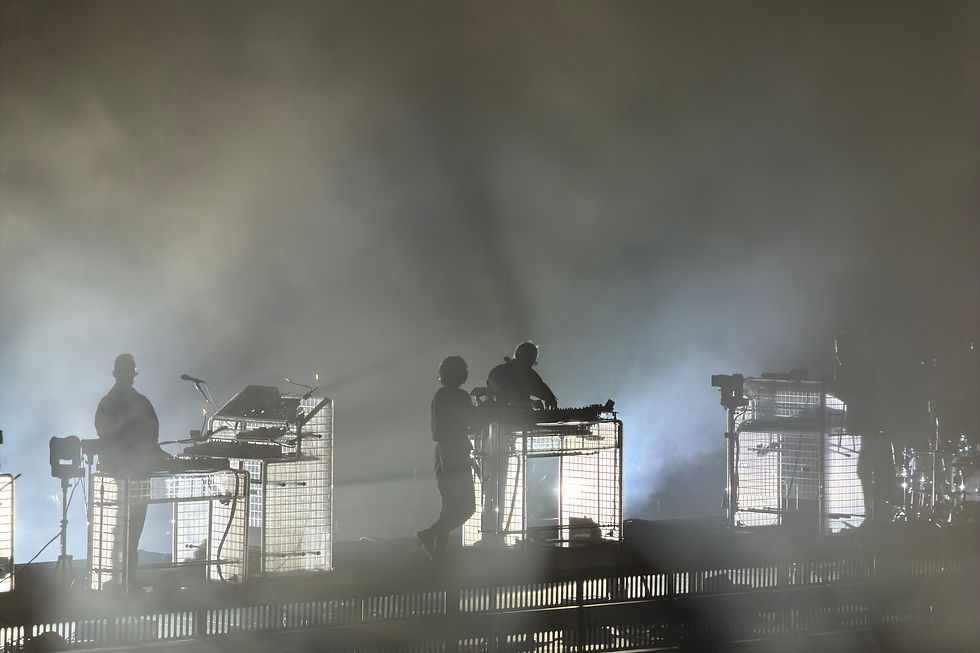
Picture this. It is somewhere past 2am at the Experts Only Festival. The stage is small. There are no full scale LED screens, no confetti cannons, no countdown clock to the next big name. What there is, is John Summit, deep into a set that has gone well past its scheduled end time and a crowd that feels no interest in going anywhere else.
The energy in the room is the kind that builds slowly and then, all at once, locks every person in the space into the same moment. Nobody is waiting for the drop. Nobody is waiting for anything. This is what they came for.
That type of feeling is hard to manufacture and impossible to fake, this is the idea that boutique festivals are built around. And more increasingly, it is what a growing section of the global dance music audience is actively choosing.
Why Boutique Festivals Like Experts Only Are Challenging the Mega-Event Model
A Shift Away From Scale
For much of the past decade, the global festival model has moved in one simple direction: bigger line-ups, larger crowds, and increasingly commercial frameworks. Ticket prices have followed noticeably. According to figures from the Association Of Independent Festivals, the average cost of a UK festival ticket rose by around 40% between 2013 and 2023, with headline acts at major events often asking fees that push prices well beyond what many average fans can comfortably afford.
At the same time, the line-ups themselves have begun to feel blurry. The same big names rotate across the same stages worldwide. For a certain kind of dance music fan, one who got into the culture through its underground roots, something about the modern festival doesn't quite fit anymore.
That dissonance is slowly creating space for something different. Independent and boutique events have seen consistent and rapid growth in demand across the UK and Europe in recent years, even as the wider live events market has faced increasing economic pressure. People are not abandoning festivals. They are becoming more specific about which ones they choose.
The Pandemic Reset
The pandemic did not make this shift happen but it has accelerated it in ways nobody anticipated.
When clubs and festivals shut down in 2020, it forced a period of reflection across the entire industry. Artists had to re-evaluated how they worked. Promoters re-evaluated certain strategies. And audiences, deprived of live music for the best part of two years, re-evaluated what they actually wanted from it when it came back.
Research from Eventbrite published in 2022 found that 78% of event attendees said they had become more selective about the events they chose post-pandemic, with quality of experience ranking above star power as a primary motivator. That shift in priorities has translated into noticeable changes in behaviour. Expensive weekends mixed with scheduling clashes have lost some of their appeal. Events that feel intentional, where every element of the experience has been considered have gained ground in their place.
The boutique model, with its emphasis on artists, personalisation, and community, was well established to meet that moment.
The Artist-Led Model: John Summit and Experts Only
Few figures in contemporary dance music illustrate this shift more clearly than John Summit.
The Chicago born producer and DJ has easily had one of the most rapid rises in recent house music history. From his 2020 breakthrough 'Deep End' which spent over 40 weeks on Beatport's Top 10, to consistent headlining slots at events across Europe and North America, John Summit has built a profile that extends well beyond music. As of 2024, he holds a top-five position on Resident Advisor's DJ rankings, placing him among the most in demand artists currently working in the genre.
But what separates Summit from many artists at his level is how deliberately he has approached the business with his own brand. Rather than existing purely as a booking within other people's frameworks, he has slowly built his own events brand. Experts Only Festival is the clearest expression of that.
Launched as an extension of his Experts Only label, the festival is heavily inspired around Summit's aesthetic and his network.
The line-ups are cohesive rather than comprehensive. The production is high but not too over the top. The emphasis is on the dancefloor experience rather than the wider spectacle. Crucially, it is an environment that feels like it was built by someone who cares about how it feels to be inside it, because it was.
'I want it to feel like a giant club night' John Summit has said himself of past events. 'Not a festival where house music is one option among twenty.'
That type of philosophy is not unique to him, but he is one of the clearest examples of a broader trend happening in the EDM industry: DJs are evolving from performers into curators, shaping entire environments rather than simply filling a slot within someone else's vision.
Artists including Four Tet, Peggy Gou, and Jamie xx have all moved in a similar direction, using their cultural impact to build experiences that reflect their own profile rather than fit in with existing festival frameworks.
What Intimacy Actually Means
Smaller does not automatically mean better. There can be poorly run boutique events just as there are large scale festival moments. But the structural advantages of the format are real.
Less walking distances between stages means less time lost to energy. Smaller capacities mean lower sound bleed and a much better use of space. Line-ups built around a shared aesthetic rather than broad demographic appeal create a more cohesive atmosphere across the site. And perhaps most importantly, there is less pressure on attendees to maximize the value of their ticket by sprinting between sets rather than settling into a single space and letting the music do what music it is supposed to do.
That last point matters more than it might initially seem. The modern festival, with its app-based scheduling tools, its FOMO-inducing clashes and its constant nudge towards the next thing, has inadvertently made attending it an exercise in project management. Boutique events offer something different. A reason to buy a ticket.
The Feeling People Are Chasing
None of this is a signal to the end of the mega-festival. Events like Creamfields, Coachella, and Tomorrowland retain a cultural weight and an infrastructure that boutique events simply cannot replicate. Their reach is different, their purpose feels unique, and for many audiences, their appeal has become desirable.
But they are no longer the only measure of what a festival can or should be. The market has diversified, and with it, so has the definition of value.
For a growing section of the dance music audience, particularly younger listeners who have come of age in an era of algorithmical culture, the draw of something like Experts Only is not in spite of its scale but because of it.
It goes back to that moment in the early hours, the crowd is locked in, the energy levels are high and the music is the only thing that matters. Nobody is chasing the next thing. Nobody anywhere else.
That is the feeling the boutique festival is selling. And right now, the demand for it shows no sign of slowing down.