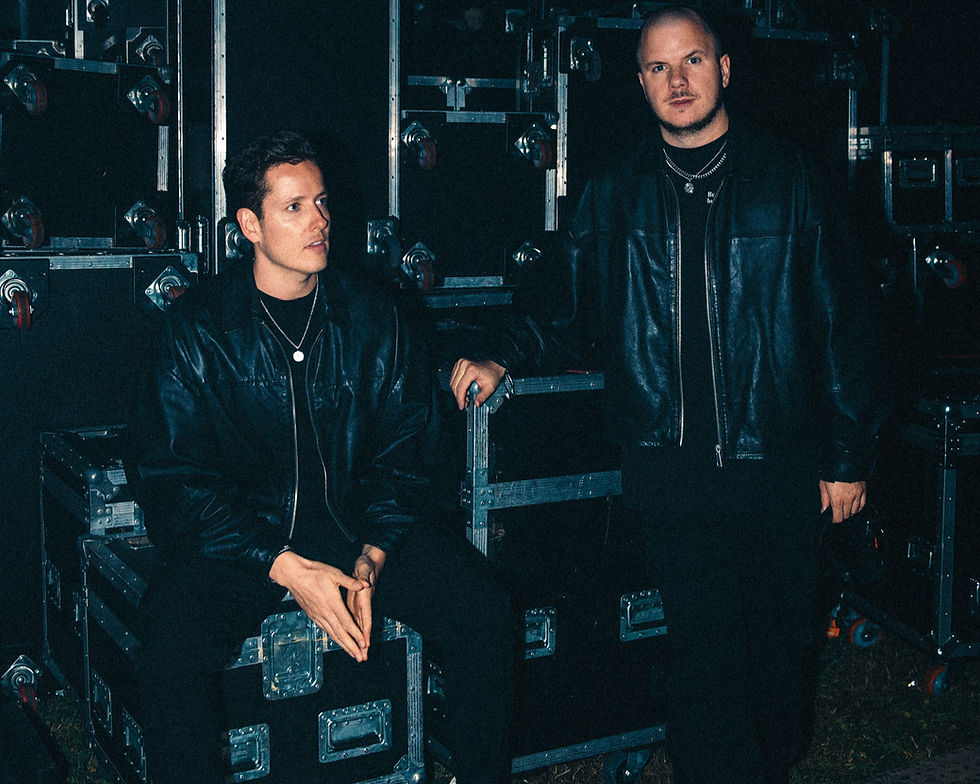
Interview with Faul & Wad, MËSTIZA and Martina Camargo
- Rukh
- Nov 14, 2025
- 8 min read

French duo Faul & Wad recently joined forces with Spanish innovators MËSTIZA and Latin
Grammy nominee Martina Camargo for ‘Tambora’, a vibrant Latin House record. Released on Virgin Records and Tomorrowland Music, the single leans on Spanish guitar and shuffling drums to capture the magic of summer in a bottle.
To celebrate the release, we caught up with the artists to discuss the collaboration process, the challenges they faced in merging their different creative perspectives, and what they have in store for the future.
'Tambora' feels like a beautiful fusion of electronic and traditional rhythms. How did this collaboration come together and where and how did you first meet?
Faul & Wad: "We’ve always been fans of Martina’s music and MËSTIZA’s world. We actually first connected with MËSTIZA because they had supported some of our music, and when we discovered their Spanish‑flamenco style, we instantly loved it. Then we came across this original Colombian song by Martina and immediately felt it was the perfect way to bring all our styles together. We got in touch, started experimenting with ideas, and “Tambora” was the result. The collaboration really clicked, and we’re super happy with how it turned out a mix of organic sounds, deep basses, and Martina’s amazing vocals."
MËSTIZA: "The connection was very organic. We had been following each other’s work for a while, and when Faul & Wad and Martina shared their idea of blending electronic beats with Afro-Colombian energy, it instantly resonated with us. We met through mutual friends in the music scene, and as soon as we talked, we knew we shared the same vision, to create something that celebrates cultural roots but also makes people dance."
[Translated] Martina: "They reached out to me to create the remix. And well, things turned out as they intended, as they wanted, and that is magnificent."
What was the inspiration behind the track’s sound and message?
Faul & Wad: "The inspiration came from mixing organic sounds, like percussion and Martina’s traditional voice with our universe of electronic, Afro and Latin house. Martina brings a deep Colombian tambora tradition into the track and we wanted to respect that while making it club-ready. The song carries a powerful message: Tambora is like a metaphor for the drumbeat that expresses both life’s emotional struggles and the ancestral tradition of the tambora. It’s about how music can heal, reconnect us, and remind us to fall in love with life all over again."
MËSTIZA:“Tambora” is all about rhythm, ancestry, and unity. It’s inspired by that universal heartbeat that connects all cultures, percussion, movement, ritual. We wanted to transmit a sense of strength and connection through the fusion of traditional drums and modern electronic production. It’s a call to remember where we come from, even on the dancefloor."
[Translated] Martina: “The message of this track is very loving, it’s about love. The tambora, as a tradition, rules the lives of riverside communities. Just as the tambora connects and unites beings, the river, and the land, the lyrics invite us to love and to the union of couples.”
What does the tambora mean to each of you, musically or culturally?
Faul & Wad: "For us, the tambora is that heartbeat of culture; it's ancestral, organic, and full of rhythm. It connects music to tradition and we wanted to honor that while bringing it into a modern electronic context."
MËSTIZA: "For us, the tambora represents the pulse, life itself. It’s the foundation of so much music from the Global South, and it symbolizes community and celebration. We see it as a bridge between past and present, between ritual and rave."
[Translated] Martina: “For me, for my people, the tambora is our greatest cultural expression, it is what represents us. It represents us culturally at the national and international level. I was born within this musical genre, I was born within this river tradition, and that says it all. The word tambora has several meanings in my village. It’s a tradition, celebration, musical genre, a drum ensemble, a double-sided [bass]drum, and a subgenre. San Martín de Loba today is best known for this genre, for this style of singing, and for this tradition.”
Can you share how you blended electronic production with organic instruments and vocals to create that powerful groove?
Faul & Wad: "We kept Martina’s original drums and vocals intact and added elements that felt natural for the dancefloor. We wanted to maintain that raw, deep energy, layering in the Moog bass in the drop and some additional organic percussion to enhance the groove without losing the authenticity of the original performance. The Spanish-flamenco guitar and other percussion elements were really key to keeping the track rooted in its Latin and Afro-Colombian essence."
MËSTIZA: "We worked carefully to keep the organic elements alive, the warmth of the percussion, the breath in Martina’s vocals, while layering modern textures and synths that give the track energy for the dancefloor. It’s all about balance. We wanted it to feel tribal and raw, but also hypnotic and cinematic."
Was there a specific moment in the studio when you felt, 'This is it, we’ve found the energy of the track’?
Faul & Wad: "Yes, this track was one of those rare ones where everything clicked instantly. Usually, it takes time to find the right energy, but from the first session we could feel it. We all shared the same vision for the song, and that’s why everything clicked so naturally. It was effortless, fun, and playful, and we knew right away this one would be special."
MËSTIZA: "Yes, when the tambora and the bassline locked together for the first time. It created this deep groove that made everyone in the room move instantly. We knew that was the heartbeat of the track. Everything else flowed from there."
You’re all artists from different musical and cultural backgrounds. How did you bridge those worlds in this collaboration?
Faul & Wad: "Collaborating across different musical universes is always exciting. Martina comes from the rich tambora tradition of Colombia, MËSTIZA brings flamenco influences and we gathered all of these influences and blended them with our Afro/Latin house sound. It was a true collaboration, with everyone playing their role perfectly. As fans of their music, we wanted to stay authentic to their styles while adding our own touch. Combining all of our universes resulted in a truly unique song."
MËSTIZA: "With respect and curiosity. We all came into the project open to learn from each other. There was no ego, just a shared desire to build something that honored each culture’s essence. Music is a universal language, and “Tambora” is proof of that."
[Translated] Martina: “Yes, we come from two totally opposite, different worlds, I am in traditional roots music and they are in electronic music. And well, things turned out as they intended, as they wanted, and that is magnificent. I am open to new proposals and we will continue working on those collaborations.”
Martina, your vocals bring a deep, ancestral soul to 'Tambora'. How did it feel bringing your roots into a modern, electronic context?
[Translated] Martina: "Cantadoras (traditional women singers) are always relevant because, although we are connected to the ancestral, we also narrate everyday life. The lovely thing about my collaborations with electronica artists is that my tradition reaches young ears, who are the future. It feels good to know that my music, with its positive messages of caring for life and nature, can reach young people, who are responsible for reversing the ecological damage that modernity has caused to the planet. It's also wonderful that artists like Faul & Wad and MËSTIZA work with my music in such a respectful and loving way. It's a privilege that the Magdalena River’s traditional music reaches such distant audiences."
Faul & Wad and MËSTIZA - What drew you to work with Martina and explore Afro-Colombian sounds?
Faul & Wad: "We’ve known Martina’s music for a while and have always been fans. We just needed the right track that would inspire us both to create something unique together. Respecting her universe was crucial, and “Tambora” reflects that authenticity beautifully."
MËSTIZA: "We’ve always been fascinated by Afro-Latin rhythms. They share a deep connection with the Mediterranean and African roots that inspire us. Working with Martina was a way to explore that connection from another side of the ocean, to blend our worlds through rhythm and emotion."
Were there any challenges or surprises that came from merging these different creative perspectives?
Faul & Wad: "Yes, working with live recordings versus perfectly quantized computer-based production can be tricky. Martina’s groove had its own organic timing, so our challenge was to merge our electronic world with her natural flow while keeping the spirit of the song alive."
MËSTIZA: "The challenge was more about finding the perfect balance between organic and electronic. Each element had its own power, and we wanted them to coexist, not compete. The surprise was how naturally it all came together once we found the right groove, it just felt meant to be."
[Translated] Martina: "The matter is doing good work, conscious work, because my songs also carry a message to the world. Although music is meant to be celebrated, it must also carry a message, and that is what I do through my songs. Through my lyrics, I bring messages to the world, whether of peace, love, ecology, and everything positive in life.”
Was the energy of 'Tambora' born from the rhythm first, or did the vocals and lyrics lead the direction?
Faul & Wad: "When we heard her vocals, we immediately felt where the production should go. We started with the drop, added this Moog bass sound and then worked backwards crafting the build-up and then the verses so the song would flow naturally from energy to story."
MËSTIZA: "Once we had that heartbeat, the rest unfolded naturally. The vocals and lyrics then gave it soul and story."
[Translated] Martina: "First I write my song. I usually create the lyrics and tune, and then I add the traditional drums. The arrangements come later, whether it is a groove of guacherna, berroche, tambora golpiá. I first create my songs, I make the lyrics, the music, and then we imprint the percussion.”
What do you hope listeners feel or take away when they hear the track?
Faul & Wad: "We hope people feel the authenticity of the song, the mix of organic tradition with modern electronic energy. It’s a track that moves both the body and the soul, and we hope it resonates emotionally while keeping the dancefloor alive."
MËSTIZA: "We hope they feel empowered, connected, and free. “Tambora” is about movement, physical and spiritual. We want people to dance, but also to feel a sense of belonging to something bigger, to a global rhythm that unites us all."
[Translated] Martina: “I hope that my lyrics and its nuances reach the listener’s soul. Music is meant to improve life, to make us think, to bring love. And if tambora (the genre) touches the audience’s heart, that is wonderful.”
Can we expect more cross-cultural collaborations like this one in the future, or is there another collaboration with all of you in the works already?
Faul & Wad: "Absolutely. We love blending genres and we plan to keep exploring these cross-cultural sounds. There’s always more music to create, and these kinds of collaborations are exactly where we want to go next."
MËSTIZA: "Yes, absolutely. We’re very passionate about blending cultures and sounds, it’s at the core of MËSTIZA’s identity. Collaborations like this remind us how powerful diversity can be in music. And yes… we might already be cooking something new together."
[Translated] Martina: “I hope there will be more collaborations in the future. I also hope that opportunities continue to arise worldwide for traditional music. These spaces within electronic music allow genres, like tambora, which have been hidden in our region, to reach audiences where they are unknown. Through these collaborations, people have started to discover tambora.”