How Social Media Has Reshaped DJ Performance
- Christopher
- Feb 28
- 3 min read

Over the past few years, social media hasn’t just changed how dance music is
promoted, it has fundamentally changed how it is performed.
With platforms like TikTok, Instagram, and Twitch driving the discovery of new
music, audiences are no longer encountering new ideas through full-length mixes or
radio shows. Instead, they’re seeing these songs through 15-second clips. As
internet culture increasingly decides how music is spread, DJs have adapted. Sets
are no longer created purely for the dancefloor, they are engineered for the
algorithm.
The “Mau P” Effect
Few examples capture this transformation better than Mau P.
In 2022, a short festival clip of his breakout track Drugs From Amsterdam exploded
on TikTok. The moment was simple but very powerful: a meme-ready vocal hook
paired with a massive crowd reaction. Within days, the clip was reposted
everywhere. It went “viral”. Fans weren’t just asking about the song they were
asking who the artist was behind it.
What followed was a complete artist reinvention. Formerly producing a completely
different style of music under the name Maurice West, Mau P emerged almost
overnight as a new project, propelled into the spotlight by viral momentum. DJs
began playing the track, influencers used it in their content, and the clip became both
a festival weapon and a marketing tool.
This wasn’t just a one-hit meme moment. It was a case study in how one 15-second
clip can reshape an artist’s whole career and how a well-timed performance moment
can function as a powerful promotional strategy.
That level of explosive visibility has inevitably changed DJ performance itself. Artists
now craft shows with viral moments in mind. Large-scale sets are structured around
capturing crowd reactions, built on the understanding that a single 15-second video
can generate more momentum in a single moment than months of traditional
marketing.
The Rise of Viral “IDs”
If you’ve been to a festival recently, you probably know the moment the crowd is
anticipating most. The DJ pauses and says those iconic words. “Who’s ready for
some unreleased music?” Phones instantly rise into the air and record the
moment.
That isn’t accidental.
Unreleased “IDs” are now designed with viral circulation in mind. High-energy drops
are paired with perfectly timed pauses. Hooks are built to loop cleanly in short clips.
The crowd isn’t just there to experience the music anymore but they’re participating
in its online amplification.
One TikTok video can turn an unknown track into a festival anthem overnight,
dramatically increasing streams and bookings. As a result, performance priorities
have shifted. Sets are structured to avoid prolonged tension or subtle development.
Momentum remains constant. Buildups are stretched longer to heighten suspense,
while drops are exaggerated to guarantee visible reaction.
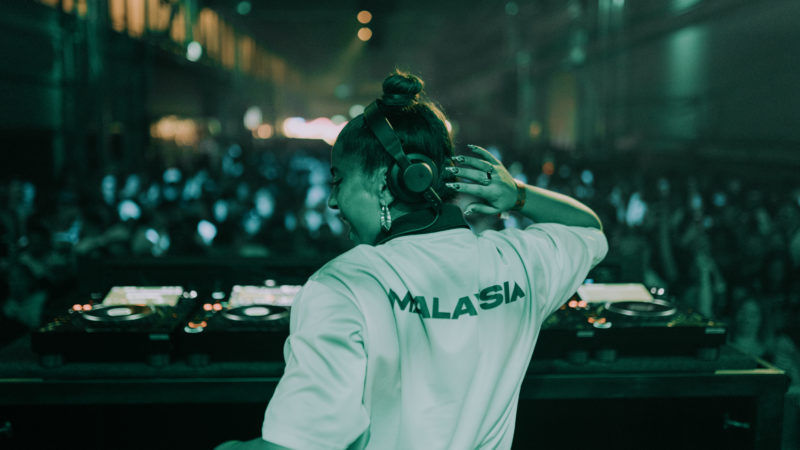
Even the DJ’s physical presence now features dancing, gesturing, and stepping into
the crowd have all become part of the content ecosystem. Every show now feels like
a launchpad, not just for music, but for viral distribution.
The “Drop-First” Era: Performing for Instant Impact:
The younger generation of EDM lovers haven't grown up discovering music through
extended mixes or radio shows. They’re discovering tracks through algorithm-fed
clips on Instagram and TikTok. That shift has fundamentally changed the
performance dynamic.
When a crowd hears a familiar viral section, the reaction is immediate. That instant
recognition fuels energy. But if momentum dips for too long, attention drifts, not just
on the dancefloor, but in a culture conditioned by highlight reels and short-form
content.
Patience has become risky. Long builds and slow-burning storytelling are harder to
sustain in large-scale environments. Sets now feel compressed, intensified, and
optimised for the biggest impact.
In Conclusion
This algorithm-driven shift raises an uncomfortable question: what gets lost when
every moment must deliver instant gratification?
Part of the answer is surprise. Spectacular visuals, elaborate stage production, even
brand-new music often feel less groundbreaking because audiences have already
seen them online. The “wow” factor is diluted before the show even begins.
Long-form storytelling once central to DJ culture becomes harder to maintain in a
climate that rewards immediacy over immersion.
This isn’t necessarily a decline. It’s a transformation. DJs are no longer just
selectors; they are performers, marketers, and content strategists simultaneously.
The drop is no longer just a musical release but a calculated moment of impact.
In the age of the algorithm, the dancefloor competes with the feed. And the most
important audience may no longer be the one standing in front of the booth, but the
one watching through a screen, replaying the same 15-second clip again and again.